Local historic district, 1976
Junk Removal in Mansion Hill, Madison
Updated
Mansion Hill in short
- 2,183
- households in Census Tract 16.04
- 97.7%
- rent their home (Madison 54%)
- 1965
- median year built (Madison 1980)
- 91.4%
- in buildings of 5+ units (Madison 43.6%)
History and housing
What Mansion Hill is
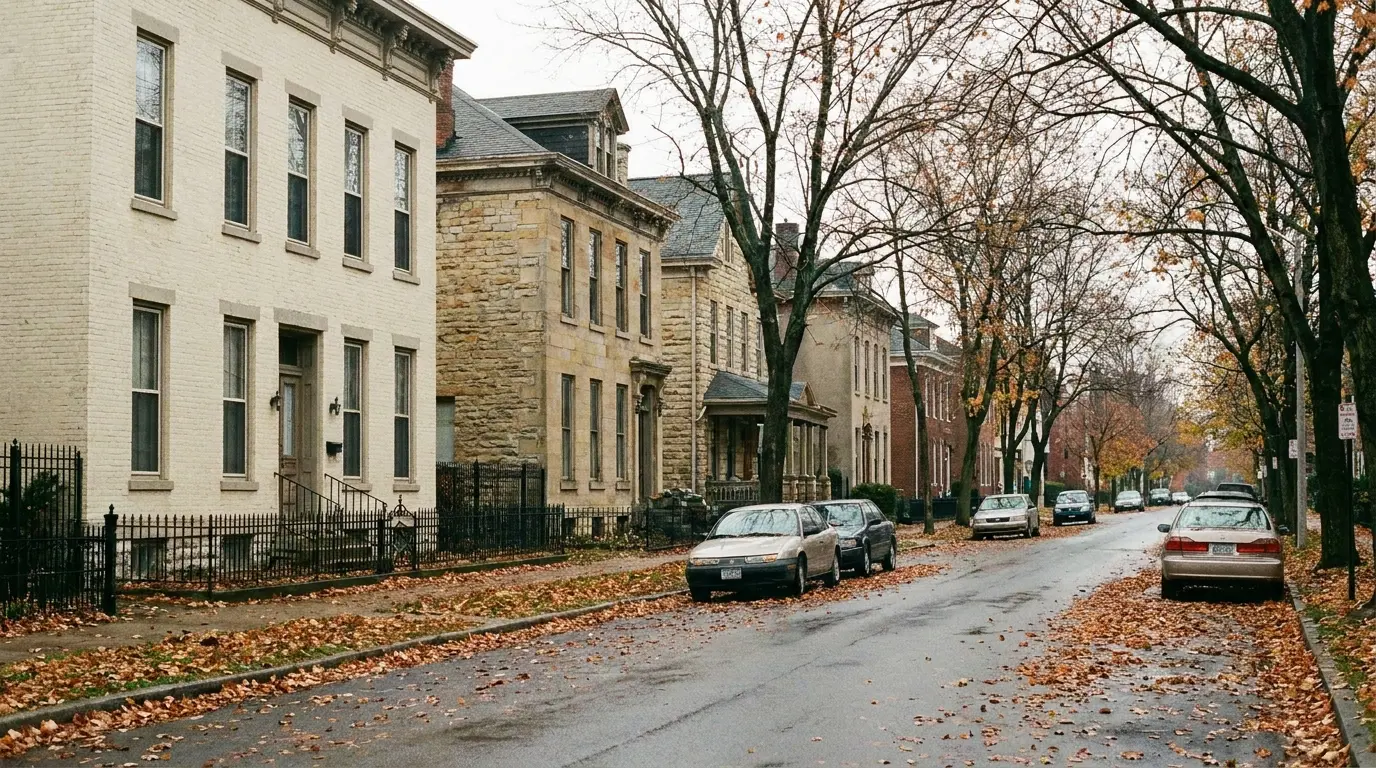
- Mansion Hill was Madison's first local historic district, named by the Common Council in 1976 after residents watched developers in the 1950s to 1970s demolish houses for apartments and commercial buildings. source
- It holds the largest number of intact Victorian houses in Madison. While the mansions remain, many are now multi-unit housing, largely for students. source
- The district was added to the National Register of Historic Places in 1997. In the 20th century the neighborhood shifted from Madison's upper class to student housing. source
- Boundary
- Roughly bounded by E. Dayton, E. Johnson, E. Gorham, N. Butler, Langdon and W. Gilman Streets
- Period of significance
- 1850 to 1930
- Local historic district
- 1976
- National Register
- June 4, 1997
- ZIP at its mapped center
- 53703
Styles the sources name: Italianate, Queen Anne, Second Empire, Romanesque Revival, Prairie, Tudor Revival.
The local numbers
Who lives here, and how long they stay
Mansion Hill is a renter's area. The Census counts 2,133 renter households out of 2,183, or 97.7%, next to 54% for Madison; 91.4% of units sit in buildings of five or more. Since January 1, 2025 the city has not collected large items from buildings of more than 8 units, so many of these households rely on their building's dumpster company, a drop-off site or a hired crew. See what changed.
The median home was built in 1965 (Madison: 1980); 72.9% predate 1980 and 18.5% were built in 2000 or later.
Turnover is high: 66.2% of households moved in during 2020 or later, against 38.8% in Madison.
Source: U.S. Census Bureau, ACS 2024 5-year (2020-2024), Census Tract 16.04, the tract at the district's mapped center point (Census Geocoder). Tracts and district boundaries do not match exactly.
Rules that apply
Clearing out a home in Mansion Hill
As a City of Madison local historic district, Mansion Hill is under the Landmarks Commission: exterior alterations, new construction and demolitions need a Certificate of Approval, applied for before the building permit. Taking furniture and household contents out is not on that list. Tearing down a garage, shed, deck or porch as part of a cleanout is. See historic district cleanouts.
The city route is free for homes on city recycling: file a Large Item Work Order, choose a set-out Sunday, and keep each piece under 8 feet, 4 feet clear of obstructions, and metal apart from furniture. Fees ($35 for a fridge or washer, $15 for a microwave or mower) apply only where a private company collects the recycling, and a TV left at the curb can cost $30.
Mansion Hill is on the isthmus, where the city's August move-out is concentrated. In 2026 crews emptied carts daily and collected furniture without work orders from August 2 to 21, in the area from the Yahara River to N Allen St, over to Grant St and down to Haywood Dr. Check the move-out guide and the city's map for your block.
Self-haul options: the three city drop-off sites (residents only, one pickup-bed load a day) and the Dane County Landfill on Maahic Way ($15.03 up to 500 pounds in 2026).
Nearby historic districts
- Third Lake Ridge71.9% rent
- Marquette Bungalows71.9% rent
- Langdon Street97.7% rent
- Fourth Lake Ridge73.7% rent
- Jenifer-Spaight71.9% rent
- Orton Park71.9% rent
Districts sharing this ZIP code or census tract. Full list of Madison's National Register districts on Wikipedia.
Common questions
Mansion Hill junk removal questions
Do I need approval to tear down a garage in Mansion Hill?
Yes. Mansion Hill Historic District is a City of Madison local historic district, and the Landmarks Commission must approve demolitions, exterior alterations and new construction through a Certificate of Approval before you apply for a building permit.
Is Mansion Hill part of Madison's August move-out?
The city's move-out operation runs on the isthmus and near campus, from the Yahara River to N Allen St, over to Grant St and down to Haywood Dr. Mansion Hill Historic District is on the isthmus; check the city's move-out map for your block. In 2026 the operation ran August 3 to 21.
How many households rent in Mansion Hill?
97.7% of 2,183 households in Census Tract 16.04 rent, per the ACS 2020-2024 5-year estimates, against 54% across Madison.
What does junk removal cost here?
National cost guides put a single bulky item at $60 to $150, a half truckload at $200 to $400 and a full truckload at $400 to $800. Madison's own large item pickup is free for homes on city recycling, by work order.
Clearing something out in Mansion Hill?
Tell us the address and what needs to go. A local crew replies with a price before anything is loaded, and handles the stairs, the sorting and the recycling.